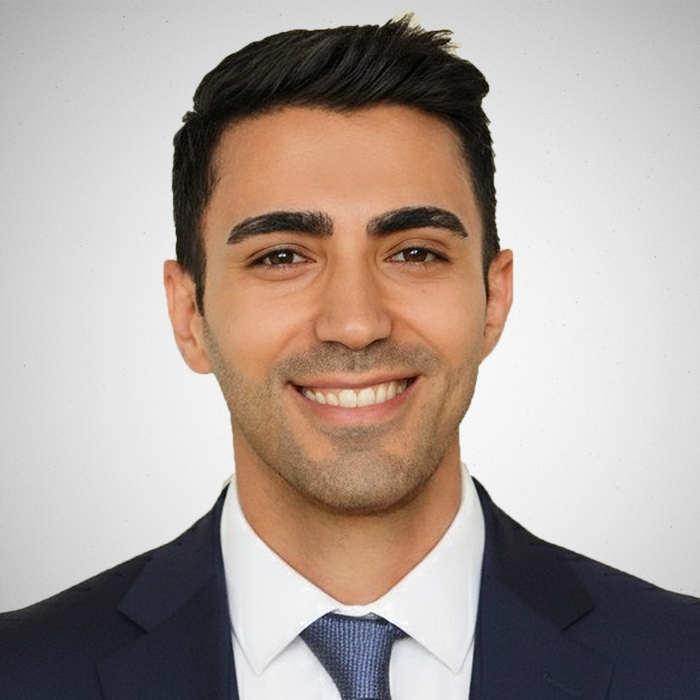
Libya stands at a critical crossroads after the killing of Abdelghani al-Kikli on Monday, head of Libya’s Support and Stability Apparatus (SSA) and one of Tripoli’s most powerful militia leaders.
The assassination of Abdelghani al-Kikli, widely known by his nickname Ghaniwa, has exposed the fragile underbelly of Libya’s complex security landscape. Overnight, the city witnessed armed skirmishes, with government forces swiftly addressing a long-standing challenge posed by an armed group.
In the aftermath of al-Kikli’s assassination, the Government of National Unity (GNU) declared it had successfully concluded a security operation targeting what Prime Minister Abdulhamid al-Dbeibah described as irregular armed groups operating in Tripoli. This may also present an opportunity for the GNU to consolidate its authority across the western part of the country.
Tarek Megeresi, Policy Fellow at the European Council on Foreign Relations (ECFR), commented that “al-Kikli was de facto king of Tripoli. His henchmen controlled the internal security agency. Other henchmen controlled the distribution of cash transfers from the central bank. They controlled numerous public companies and ministries”.
Al-Kikli, initially a civilian bakery owner in Tripoli, formed a militia in Abu Salim after Gaddafi’s fall, gradually gaining significant influence in post-2011 Libya.
His forces were pivotal in the 2015 Libya Dawn operation and later integrated into state structures under the interior ministry in 2016. His sway expanded under the Government of National Accord (GNA), the previous UN-backed government, leading to the creation of the Support and Stability Apparatus.
Controlling areas from Tripoli to Gharyan and Zliten, al-Kikli became one of the city’s top militia leaders alongside the Special Deterrence Force, the 444th Brigade, and the 111th Brigade. He has also been accused of abusing asylum seekers and faced allegations of crimes against humanity.
Following the skirmishes in Tripoli, the UN Mission to Libya (UNSMIL) warned that the situation in the country could “spiral out of control” and called armed groups to de-escalate the tension.
Libya has remained divided between two main protagonists: the internationally recognised Government of National Unity, led by Abdulhamid al-Dbeibah, and the eastern region controlled by Khalifa Haftar.
Despite a ceasefire signed in October 2020, which followed Khalifa Haftar’s unsuccessful military campaign to capture Tripoli in April 2019, Libya has remained fragmented.
Libya has faced economic challenges, with concerns over corruption among some political elites who have been utilising state resources, particularly from the oil sector. Control and distribution of oil resources have been central to the ongoing power struggle in the country. The lack of effective governance and a clear system for fairly distributing oil revenues contributes to ongoing uncertainty and competition among different factions.
This situation has led to a situation where some political elites have benefited from the resources at the expense of broader institutional development, resulting in growing difficulties for many Libyans in meeting their basic economic needs. Additionally, external actors supporting various factions have added complexity to an already fragmented political landscape.
Meanwhile, political progress has also stalled, with the parliament rarely making quorum and no meaningful progress to unify the country’s state institutions, particularly the military. Rival groups have failed to reach a consensus on holding long-awaited elections, with no agreed-upon election laws or political framework.
Since 2021, the UN and international community have made limited, ineffective efforts to broker genuine political reform, leaving Libya in a state of persistent political and economic instability, with no clear path to national reconciliation or functional governance.
The ongoing stalemate in Libya can largely be attributed to the absence of a national consensus on the country’s future governance and direction. Various groups with vested interests in maintaining the current situation, including armed militias (such as al-Kikli’s) and individuals benefiting from the conflict, have become deeply entrenched in power. As a result, they have limited motivation to seek compromise, allowing the deadlock to persist. Moving forward, a more inclusive national dialogue among Libyans will be essential to break this cycle and develop a shared vision for the country’s future.
The current situation indicates that large-scale armed confrontation is unlikely in the immediate term. Since the 2020 ceasefire agreement, Libya has maintained a relative calm, with only minor localised tensions rather than widespread fighting. The risk of renewed conflict remains significant if Libya fails to make substantial progress in key areas: establishing comprehensive national security, ensuring fair distribution of oil revenues, improving Libyans’ living standards, and combating systemic corruption.
The recent events following the killing of al-Kikli in Tripoli present a significant opportunity for Libya’s Government of National Unity (GNU) to assert greater control over the country’s security landscape. As the government successfully concluded its security operation against irregular armed groups, there is potential for the GNU to consolidate its authority, particularly in the western region. The diminishing influence of powerful militias, once integral to the fabric of post-Gaddafi Libya, signals a shift towards greater state control and a chance for rebuilding governance structures. While challenges remain, these recent developments offer hope for a more stable and unified Libya moving forward.